
Sensitive Skin Facial in Mount Pleasant, SC: A Facial That Actually Works for Rosacea, Eczema, and Reactive Skin
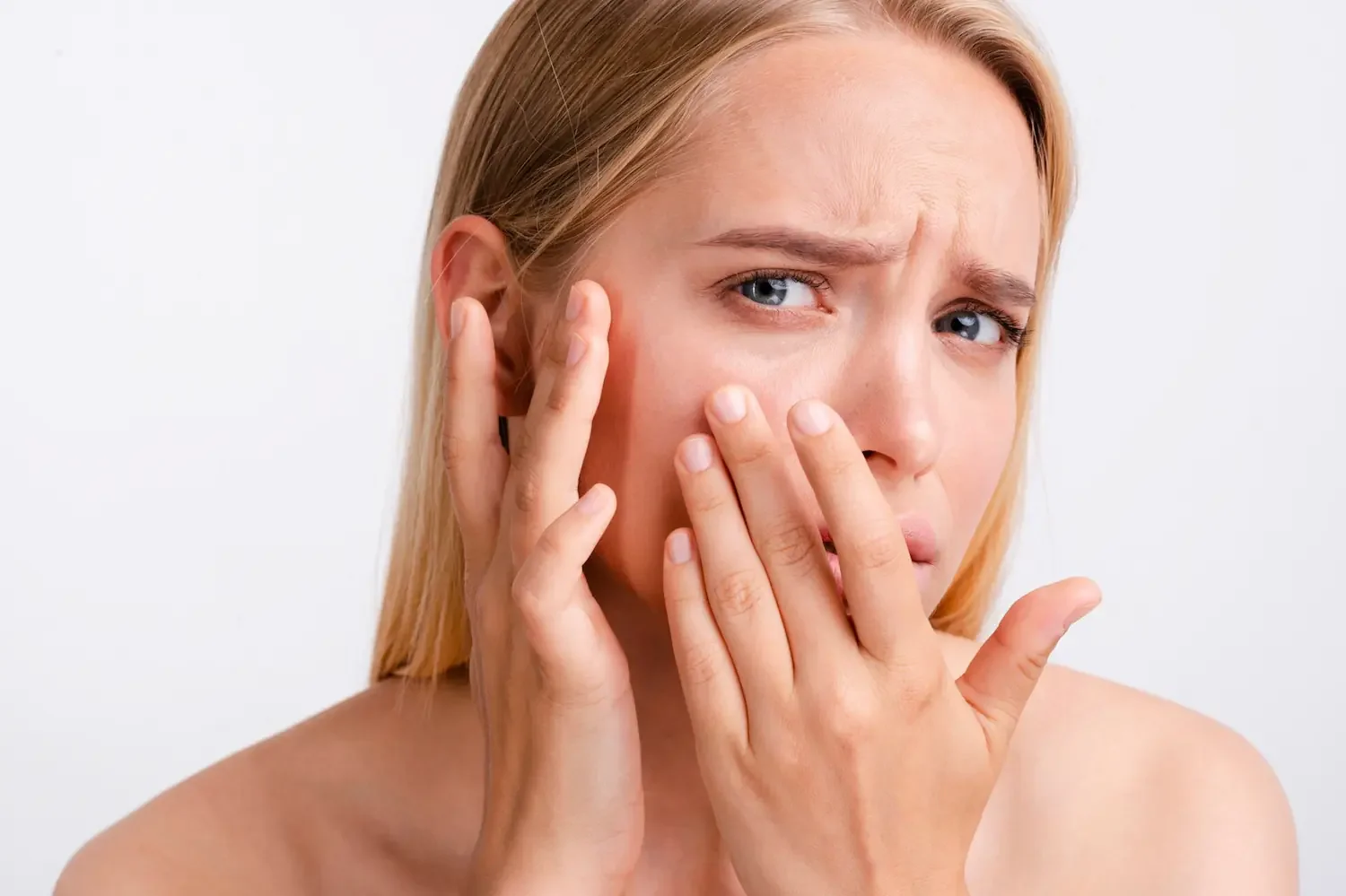
If you have sensitive skin, there is a good chance you have had a bad facial experience. Your skin was red and angry for days after. The esthetician pushed through when you said something felt wrong. You walked out looking more reactive than when you walked in. You were told your skin was "purging" when it was actually irritated.
This scenario is far more common than it should be, and it is the reason many people with rosacea, eczema, perimenopause-related sensitivity, or simply reactive skin have given up on professional facials entirely. They have decided that their skin is just "not built for it."
That conclusion is understandable. It is also wrong. The right facial for sensitive skin does not exist yet in every studio, but it absolutely exists at Skin Glow Collective in Mount Pleasant. The Sensitive Skin Facial was not created by modifying a standard facial for more delicate skin. It was built from the ground up for skin that needs a different approach. And it is performed by Samantha Katz, BSN, RN, a Registered Nurse with 20+ years of clinical experience, which means your skin is being assessed by someone who understands the clinical dimensions of what is happening, not just the aesthetic ones.

Why Most Standard Facials Fail Sensitive Skin
Standard facial protocols are designed for normal to oily skin, which is the majority of the market. When those protocols are applied to sensitive, reactive, or condition-specific skin without meaningful modification, the results can range from disappointing to genuinely damaging.
Here is what standard facials do that specifically harms sensitive skin:
Steam: hot steam dilates blood vessels and increases skin temperature, which can trigger rosacea flushing and flares. A steaming session that feels relaxing to a normal-skinned client can send a rosacea client's skin into an active flare that lasts for days.
Standard exfoliation: AHA and BHA acids, physical scrubs, and even some enzyme exfoliants that are well-tolerated by normal skin can breach the compromised barrier of sensitive skin, causing irritation, inflammation, and significant reactivity. The exfoliation that 'resurfaces' normal skin strips and damages reactive skin.
Fragrance: the most common cause of contact dermatitis in skincare products. Most standard facial product lines contain fragrance for the spa sensory experience. For sensitive skin, this is a reliable trigger for allergic and irritant reactions.
Aggressive extractions: forceful manual extractions that dislodge congestion effectively in normal or resilient skin can trigger inflammatory responses and hyperpigmentation in reactive skin, particularly skin already dealing with rosacea or post-inflammatory sensitivity.
High-stimulation massage: deep facial massage that increases circulation and brings blood to the face's surface can cause significant flushing and prolonged redness in rosacea-prone skin.
The problem is not that sensitive skin cannot tolerate professional treatment. It is that many providers apply protocols that are genuinely inappropriate for that skin type, and the skin pays the price.
What 'Sensitive Skin' Actually Means: A Clinical Breakdown
"Sensitive skin" is not one condition. It is a category that encompasses several distinct skin states, each with different clinical characteristics and treatment implications. Understanding which type of sensitivity you are dealing with matters because the right approach for rosacea is different from the right approach for ejeczema, which is different from perimenopause-related sensitivity.
Rosacea
Rosacea is a chronic inflammatory skin condition primarily affecting the central face, including the cheeks, nose, forehead, and chin. It is characterized by persistent redness, visible blood vessels (telangiectasias), flushing triggered by heat, alcohol, spicy food, exercise, and emotional stress, and in some subtypes, inflammatory papules and pustules that can be mistaken for acne.
Rosacea affects an estimated 14 million Americans and is significantly underdiagnosed, with many clients receiving inappropriate facials (or avoiding them entirely) without ever having the condition properly identified. In the Lowcountry's heat and humidity, rosacea is particularly challenging because environmental temperature is an unavoidable trigger for much of the year.
The core treatment principle for rosacea skin is: calm, do not stimulate. Every protocol decision must be evaluated against whether it adds or removes inflammation from an already overactive system.
Eczema (Atopic Dermatitis)
Eczema is a chronic skin condition caused by a malfunction of the skin's barrier function, specifically a deficiency or abnormality in the proteins (particularly filaggrin) that maintain the barrier's integrity. Without a functional barrier, moisture escapes from the skin more readily, external irritants and allergens penetrate more easily, and the skin becomes caught in a cycle of dryness, itchiness, inflammation, scratching, and further barrier disruption.
Eczema requires a fundamentally barrier-focused treatment approach: the goal is to repair and support the barrier, not to exfoliate, stimulate, or challenge it. Standard facial exfoliation on eczema skin is contraindicated when the skin is in an active state, and even in a stable phase, must be approached with extreme caution.
Perimenopause and Menopause-Related Skin Changes
Hormonal changes during perimenopause and menopause are one of the most commonly overlooked causes of new-onset skin sensitivity in women in their late 30s, 40s, and 50s. As estrogen levels decline, the skin loses collagen, hydration capacity, and barrier function. Skin that was previously normal or oily can suddenly become reactive, dry, and easily irritated by products that it tolerated without issue for decades.
This hormonal sensitivity is often compounded by the fact that many women in this phase continue using the products and protocols that worked for their younger skin, not realizing that their skin's needs have fundamentally changed. A facial approach that rebuilds and supports barrier function while avoiding unnecessary stimulation or challenge is essential.
Contact Dermatitis
Contact dermatitis is a localized inflammatory reaction caused by direct contact with an irritating substance (irritant contact dermatitis) or by an allergic immune response to a specific ingredient (allergic contact dermatitis). Common triggers in skincare and professional facial products include fragrances, preservatives (particularly certain parabens and formaldehyde releasers), nickel (in some metal tools), and specific plant extracts.
Identifying and eliminating the specific trigger is the core treatment strategy for contact dermatitis. In a professional facial context, this requires a thorough intake conversation and a product selection process that specifically avoids the client's known triggers.
Post-Procedure Sensitivity
Skin that has recently undergone laser treatment, a strong chemical peel, or other procedures is in a state of active healing that requires a very different approach from normal maintenance skincare. The barrier has been intentionally compromised by the procedure and is rebuilding. Professional treatment during this window must focus exclusively on supporting that rebuilding process, not on adding new challenges.
Why a Registered Nurse Makes a Difference for Sensitive Skin
The distinction between a licensed esthetician and a Registered Nurse provider matters significantly for sensitive skin treatment.
Estheticians receive training in skincare techniques, product application, and general skin assessment. This training is valuable, but it does not include the clinical education in pathology, pharmacology, and systemic health conditions that is part of nursing training. When a client with rosacea sits down for a facial at a standard spa, the esthetician may or may not recognize the condition, may or may not know what protocols are contraindicated, and may or may not understand the clinical implications of the skin's response during the treatment.
Samantha Katz, BSN, RN brings 20+ years of clinical nursing experience to every appointment. She evaluates skin conditions through a healthcare lens: understanding the difference between rosacea and acne, recognizing when what looks like sensitivity is actually a contact dermatitis reaction, knowing how to adjust protocols for clients whose skin is in a post-procedure healing phase, and understanding how medications and systemic health conditions affect skin behavior and treatment response.
For sensitive skin clients who have been burned (sometimes literally) by receiving inappropriate facials from well-intentioned but under-equipped providers, this clinical foundation is not a minor detail. It is the reason Skin Glow Collective's Sensitive Skin Facial delivers a different result.
The Sensitive Skin Facial Protocol: What Actually Happens
The Sensitive Skin Facial at Skin Glow Collective is not a modified standard facial. Every step and every product decision is made specifically for skin that needs a gentle approach.
Pre-Treatment Assessment
Every appointment begins with a conversation. Before anything touches your skin, Samantha reviews your skin history, current conditions, known triggers, nedications, recent reactions, and what you are hoping to achieve. For first-time clients, this consultation is thorough. For returning clients, it is a focused check-in to capture any changes since the last visit.
Every product that will be used during your treatment is reviewed against your known sensitivities and contraindications before it is applied. Nothing is assumed to be safe because it is professional-grade or "natural." Your specific skin is the standard.
Cleansing
Gentle, fragrance-free, non-stripping cleansers are used. No hot water. Lukewarm temperature throughout. No friction-based application (no washcloths or textured tools that add mechanical irritation). The goal is removing surface debris without removing the skin's natural moisture barrier or triggering any inflammatory response.
No Steam, or Modified Low-Heat Approach
Steam is avoided or used in a very limited, cool-temperature modified form. For rosacea clients specifically, heat of any kind is kept away from the face throughout the entire treatment. This means cooler products, cooler treatment environment, and no heat-generating tools.
Gentle Exfoliation, Applied Selectively
Exfoliation is not applied uniformly across the entire face by default. Samantha assesses which areas, if any, can benefit from gentle exfoliation at this visit and which should be left undisturbed. For clients with active eczema or a current rosacea flare, exfoliation may be skipped entirely at that session in favor of purely supportive, barrier-repair treatment. For clients in a stable phase, an appropriate enzyme exfoliant or a very low-concentration acid may be used on specific areas with careful monitoring.
Modified or Skipped Extractions
Standard manual extractions are modified or skipped based on the skin's current state. For reactive skin, forced extractions can cause inflammatory responses that make the skin significantly worse. When extractions are performed, they are done with the gentlest possible technique, on the most appropriate areas only, and stopped immediately if any inflammatory response is observed.
Calming Masking and Soothing Treatments
The masking component uses formulations specifically selected for their anti-inflammatory, barrier-supporting, and soothing properties. Common ingredients include centella asiatica (cica), colloidal oatmeal, ceramides, niacinamide, and aloe vera, all of which have clinical evidence for calming reactive and compromised skin. Ingredients that are avoided include fragrances, essential oils, high-concentration acids, and alcohol-based formulas.
Post-Treatment Care and Home Guidance
You leave with written post-care instructions specific to your skin and the treatment performed that day. Samantha will recommend specific products for your at-home routine focused on barrier support and sensitivity management. For clients who want to move toward additional treatments over time, she will discuss what a gradual pathway looks like and what milestones need to be met before introducing more active protocols.
The Path Forward: Gradual Protocols for Sensitive Skin Clients
The Sensitive Skin Facial is often the right starting point, but it is not necessarily the permanent ceiling for clients with sensitive skin. Many clients whose skin is reactive or compromised can, over time and with consistent professional care, build enough barrier health and skin resilience to safely incorporate more active treatments.
Samantha takes a long-term view of sensitive skin care: starting with the gentlest appropriate treatment, building tolerance session by session, and introducing additional actives or techniques only when the skin has demonstrated the stability to receive them. This graduated approach produces better outcomes than trying to force sensitive skin through protocols it is not ready for.
For clients with rosacea who want to eventually address the texture concerns or pigmentation that often develop alongside the condition, for clients with eczema who want to address rough texture or uneven tone, or for clients whose perimenopause-related sensitivity has stabilized and who now want to address aging concerns, there is a path forward. It starts with building the right foundation.
Sensitive Skin in the South Carolina Summer
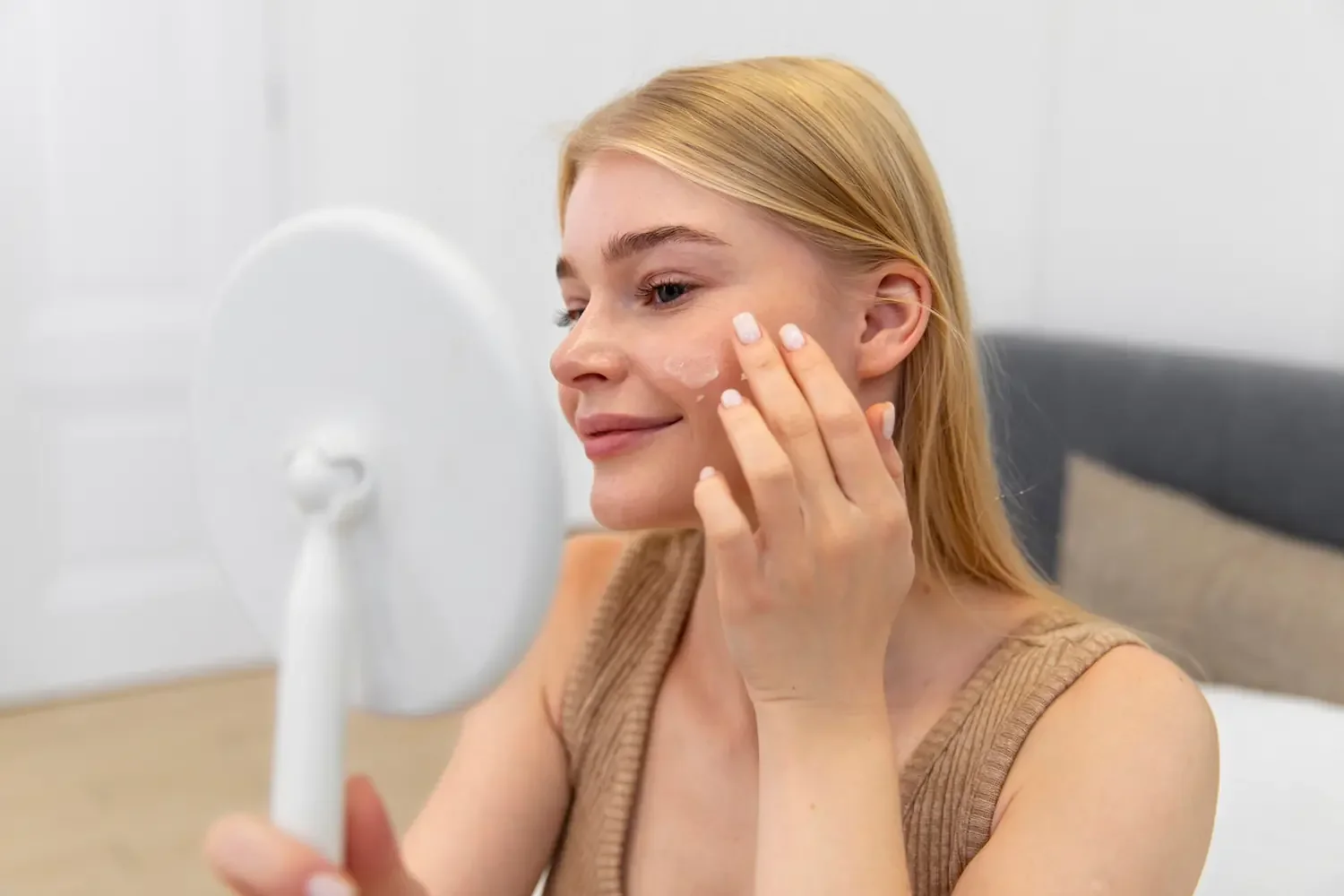
Summer in the Lowcountry presents specific challenges for sensitive skin. Heat is a primary rosacea trigger. Humidity creates conditions where sweat, sunscreen, and makeup interact with reactive skin in ways that increase irritation. Air conditioning creates dramatic temperature fluctuations that stress the barrier. Sun exposure worsens both redness and any pigmentation concerns.
The Sensitive Skin Facial is one of the very few professional skin treatments that can be received safely throughout summer without modification. It does not involve any treatment that increases sun sensitivity, requires sun avoidance, or adds heat to skin that is already managing heat-related triggers.
For sensitive skin clients, summer maintenance at Skin Glow Collective is actually one of the most important investment periods, because the environmental challenges of summer make consistent professional support more valuable, not less.
Frequently Asked Questions: Sensitive Skin Facials in Mount Pleasant
Is there a professional facial that is safe for rosacea?
Yes. The Sensitive Skin Facial at Skin Glow Collective is specifically designed to avoid all common rosacea triggers: heat, steam, fragrance, alcohol, aggressive exfoliation, high-acid formulas, and massage techniques that increase facial circulation and flushing. Performed by a Registered Nurse with 20+ years of clinical experience.
What is the best facial for sensitive skin in the Charleston area?
The Sensitive Skin Facial at Skin Glow Collective in Mount Pleasant is the only sensitive skin facial in the area performed by a Registered Nurse (BSN, RN) with specific clinical training in conditions including rosacea, eczema, and perimenopause-related skin changes.
Can someone with eczema get a professional facial?
In many cases, yes, but it depends on the current state of the skin. Eczema in an active flare with open, weeping, or broken skin is a contraindication for treatment. In a stable phase, the Sensitive Skin Facial can be adapted appropriately with a focus on barrier support and avoiding any irritant triggers. Samantha assesses skin state at every appointment before proceeding.
Why do standard facials often make sensitive skin worse?
Standard facial protocols are designed for normal to oily skin and typically include steam, active exfoliation, fragrance-containing products, standard extractions, and stimulating massage. For sensitive or reactive skin, each of these components can trigger inflammatory responses, barrier disruption, or prolonged redness that leaves the skin worse than before treatment.
How often should someone with sensitive skin or rosacea get a facial?
Every 6 to 8 weeks is the typical starting point for most sensitive skin clients, allowing adequate recovery time between sessions. As your skin builds tolerance and stability with consistent professional care, this frequency can sometimes be increased. Samantha will recommend a specific schedule based on your skin's response at each visit.
Can perimenopause cause sensitive skin?
YfW3 Declining estrogen during perimenopause and menopause causes the skin to lose collagen, hydration capacity, and barrier function. Skin that tolerated products and treatments without issue for decades can suddenly become reactive, dry, and easily irritated. The Sensitive Skin Facial approach at Skin Glow Collective is designed to support and rebuild barrier function, which is the core need for perimenopause-related skin sensitivity.
Are there skincare products you recommend for sensitive skin at home?
YfW3 Samantha will make specific recommendations during your appointment from the professional lines she carries, including Alastin, SkinBetter Science, Epionce, and iS Clinical, all of which offer fragrance-free, clinically developed formulas appropriate for reactive skin. The foundation for most sensitive skin clients: a gentle fragrance-free cleanser, a barrier-supporting moisturizer, and mineral SPF 30+ daily.
What ingredients should I avoid if I have sensitive skin?
The most common triggers for sensitive and reactive skin include synthetic fragrances, essential oils (particularly citrus, eucalyptus, and peppermint), denatured alcohol (listed as SD Alcohol or Alcohol Denat.), sodium lauryl sulfate (SLS), physical exfoliant particles, high concentrations of AHA and BHA acids, and formaldehyde-releasing preservatives. Samantha will review your current products during your consultation and flag any that may be contributing to your reactivity.
Where is Skin Glow Collective located in Mount Pleasant?
1031 Chuck Dawley Blvd, Suite 5, Mount Pleasant, SC 29464. We serve clients from Mount Pleasant, Sullivan's Island, Isle of Palms, Daniel Island, downtown Charleston, and throughout the Lowcountry. Get Directions
Book Your Sensitive Skin Facial in Mount Pleasant
If past facial experiences have left you feeling like professional skincare is not for you, we would like to show you that the right treatment makes all the difference. The Sensitive Skin Facial at Skin Glow Collective was built specifically for skin like yours.
Book the Sensitive Skin Facial
Learn More About This Treatment
Skin Glow Collective | 1031 Chuck Dawley Blvd, Suite 5, Mount Pleasant, SC 29464 | (843) 606-0402